
February Tree of the Month: The Tibetan Cherry (Prunus serrula)
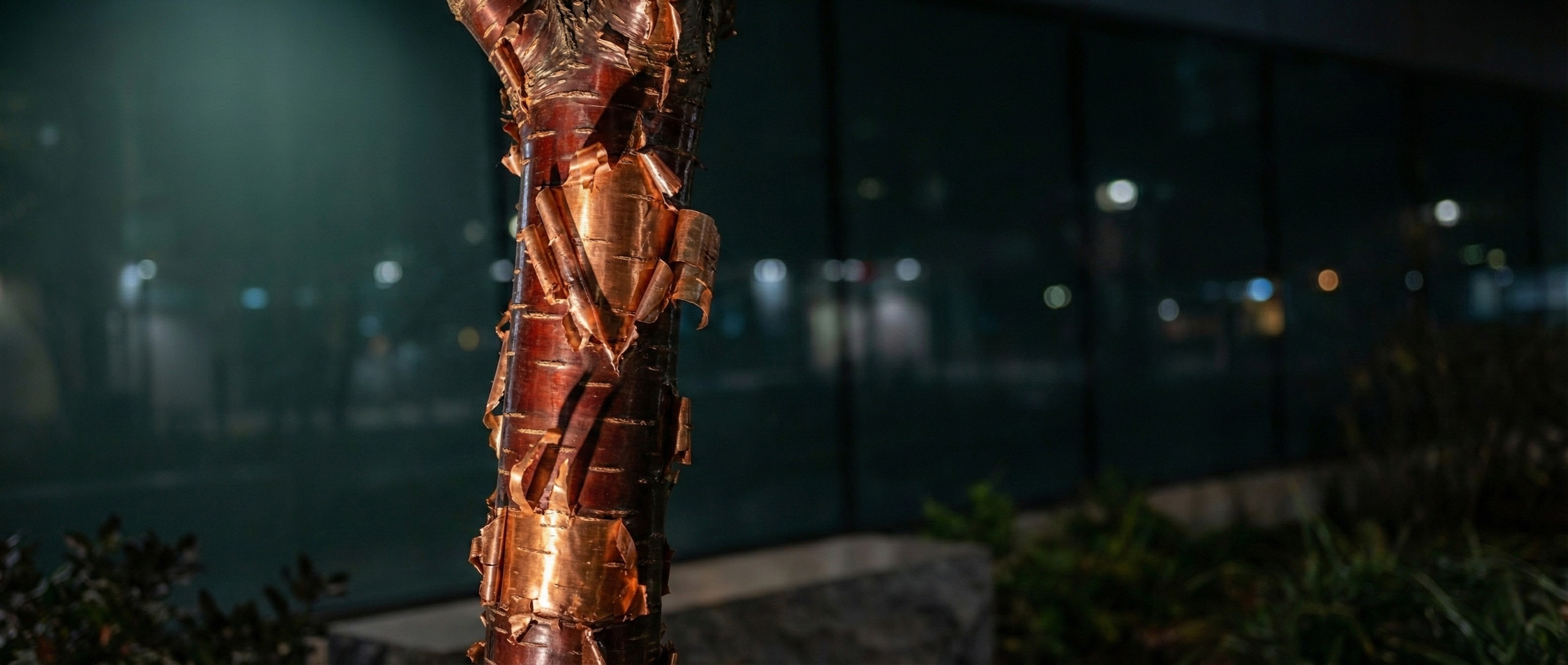
Visual Anchor: Specular Highlights of Peeling Mahogany Bark | Edition 2 Hero
Height: 6–8m (Structural Scale)
Bark: High-Gloss Copper/Mahogany
Hardiness: H6 (Fully UK Hardy)
Growth: Moderate/Architectural
Role: Deciduous Structural Hero
The Nocturnal Journal
✨ Hand-Polish: Reveal New Copper layers.
✂️ Pruning: Mid-summer to avoid Silver Leaf.
❄️ Sanctuary: Winter HD Anchor.
Strategic Rationale: The Chromatic Anchor
While the vast majority of the London urban forest remains in a state of skeletal dormancy throughout February, the Prunus serrula acts as a high-resolution source of chromatic intensity. Against the often monochromatic, grey backdrop of the urban winter—where slate pavings and damp brickwork dominate the palette—this specimen provides a stark, warm contrast that effectively anchors the entire garden layout.Mental Health: Decompression & Grounding
Touching the papery, translucent ribbons of the Tibetan Cherry bark is a sensory exercise that draws you out of your "analytical brain" and back into the physical moment. We use this tactile anchor to signal to the nervous system that it is safe to decompress, countering city stress.
“A tactile masterpiece featuring mahogany-red bark that peels away in translucent strips to reveal a shimmering, metallic lustre beneath.”
Historical Provenance & UK Legacy
The Tibetan Cherry's journey to the British Isles is a testament to the golden age of plant hunting. It was first introduced to the UK in 1908 by the legendary explorer Ernest "Chinese" Wilson. Wilson recognised that its extraordinary bark was an evolutionary response to high UV exposure and extreme temperature swings in Western China.Horticultural Deep Dive: Material PerformanceStructural Hero: Reaching 6–8m, it serves as the premier focal point for a structural layout. We frequently specify multi-stem specimens for smaller London courtyards.Macro-Texture: Bridges the visual gap between cold hardscaping—such as London Stone—and softer garden elements.Seasonal Value: Transitions into a canopy of narrow leaves in spring, sustaining a lush micro-climate.
The Savage Truth
"The bark on a Tibetan Cherry peels better than a cheap wallpaper job in a rental flat. Thankfully, it looks a lot more expensive and won't require a decorator to fix it!" — Stuart Savage
The Digital Twin Context: Risk Mitigation
We bridge the "Trust Deficit" inherent in traditional 2D sketches through high-fidelity virtual modelling. By simulating the specific 19:00 dusk glow in our 3D models, we verify exactly how the mahogany bark will interact with your boundary treatments before a single spade hits the ground. This allows us to calibrate the exact positioning of the tree so that its reflective qualities are visible from your main living area.Nocturnal Design: The CRI VariableDuring February nights, the metallic sheen of the trunk reflects artificial light with a precision that matte-barked trees simply cannot achieve. We utilise precise Grazing Light techniques—placing high-CRI fixtures in close proximity to the base—to emphasise the mahogany tones. Standard garden LEDs often wash out the deep reds into a muddy brown, whereas our specified 2700K sources preserve the chromatic integrity of the wood.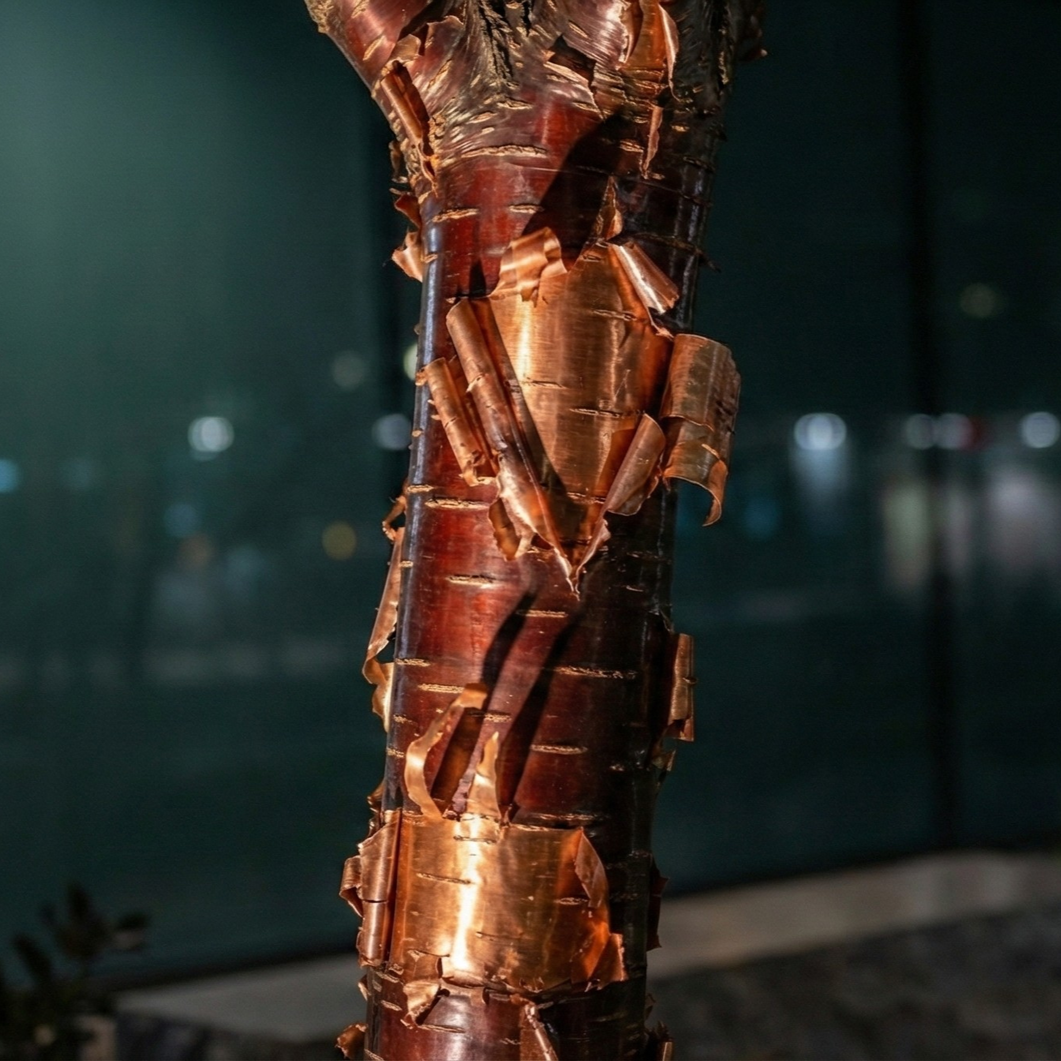
Technical Simulation: Grazing Light Performance
Figure 1.1: Specular Reflection & Acute Angle Analysis
Physics of Light: By placing fixtures in close proximity to the base (within 150mm), the light "grazes" the physical edges of the peeling bark, creating sharp specular highlights that provide 3D depth.
February Plant: Flowering Quince
While the Tibetan Cherry provides the vertical anchor, the Chaenomeles speciosa 'Nivalis' bridges the seasonal gap. This Victorian garden favourite is prized for its structural tenacity and early-season nectar.UK Heritage: The Victorian Wall Anchor
A staple of British cottage walls since the 19th century, the Flowering Quince (or 'Japonica') has been the hallmark of urban spring-prep for over a hundred years. It remains the premier choice for pollinators in February.
The Nocturnal Journal
Edition 2 officially launches Monday 3rd February. Subscribe for deeper architectural insights.
Subscribe to the JournalJoin the Sanctuary Community
