
Happy Valentine's to the Goths: Designing a "Crimson Nocturne" Garden
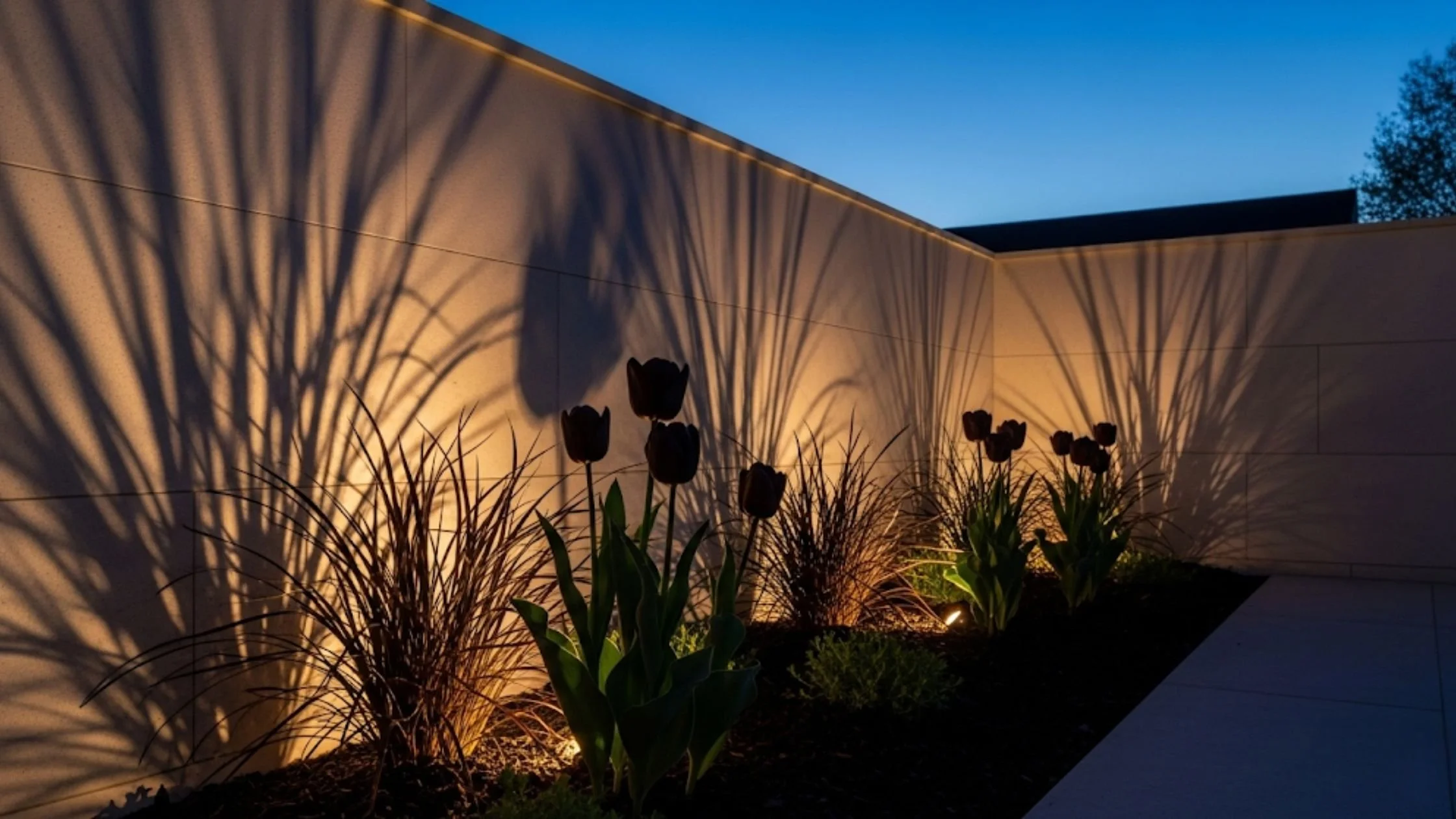
The Architecture of Stillness: Curating the darkness with 2700K ultra-warm white light and the Crimson Nocturne palette.
Designing a “Crimson Nocturne” Garden for Gothic Valentines
Forget the saccharine pinks and bright reds of a supermarket Valentine’s bouquet. In high-end garden design, 2026 is moving towards the "Crimson Nocturne" palette—a sophisticated embrace of deep purples, near-blacks, and velvet reds that create depth rather than demanding attention.
While a white garden glows, a dark garden absorbs. It creates mystery. It creates a "void" in the landscape that draws the eye in, rather than reflecting it back. This is the Architecture of Stillness: a space that doesn’t shout for your attention, but quietly demands your presence. In an era of digital noise, the dark garden is the ultimate "Do Not Disturb" mode for your physical environment.
The Technical Engine: Why "Black" Gardens Often Fail
Most amateur designers treat dark plants like any other plants. They plant them, throw a cheap 3000K (or heaven forbid, 4000K) floodlight at the lawn, and wonder why their garden looks like a muddy puddle at 8:00 PM. A garden is not a prison yard; you shouldn't be "interrogating" your plants with unshielded light.
Before you even touch a spade, we establish the Vertical Anchor. We never trust a tape measure for verticality—we count the bricks from the ground to your Damp Proof Course (DPC). At exactly 75mm per brick, this is our calibration standard.
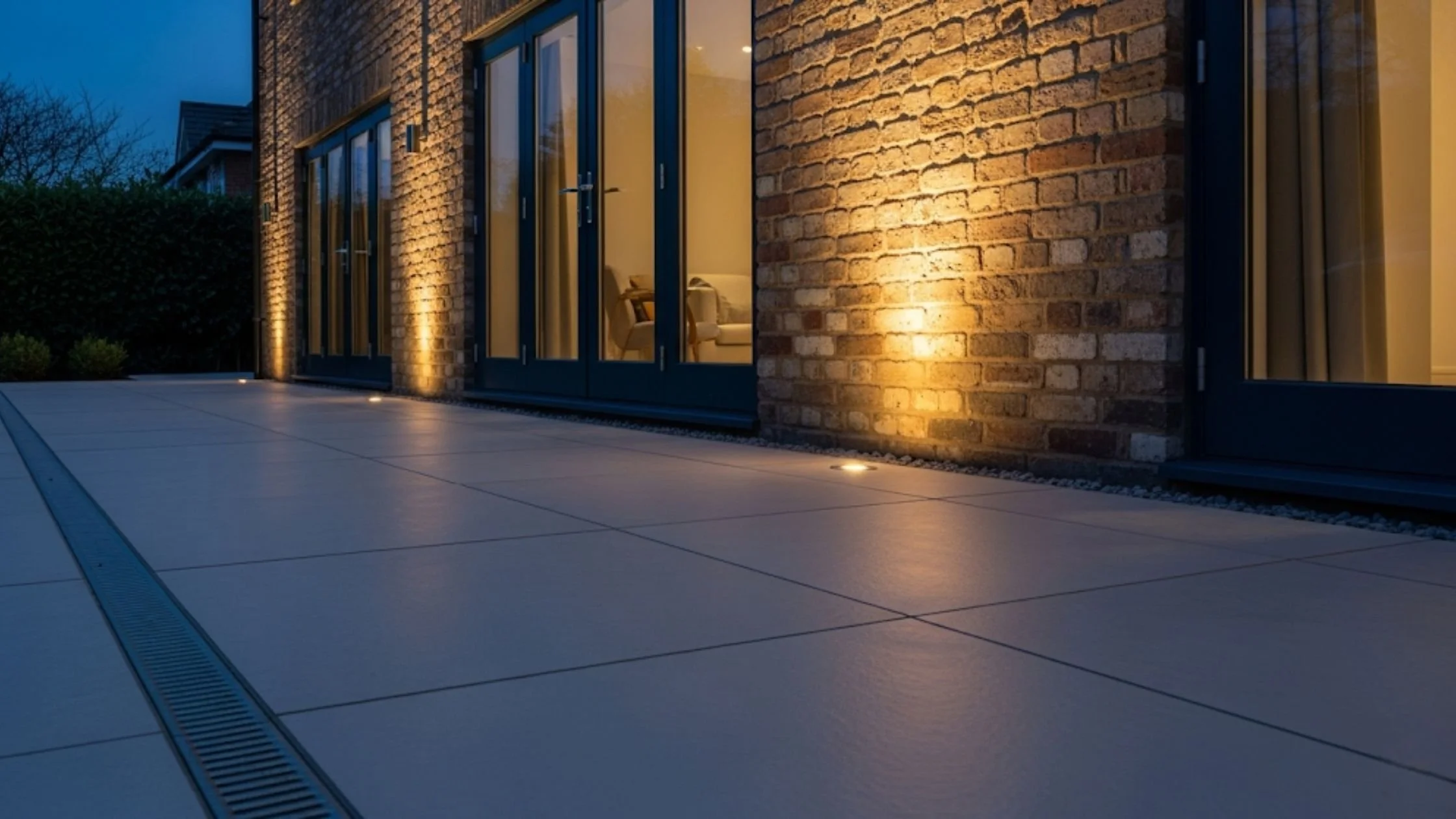
The 150mm Protocol in Practice: A masterclass in technical compliance and nocturnal aesthetics. This terrace isn't just a patio; it's an engineered sanctuary. By maintaining the 150mm gap—exactly two brick courses—we prevent rising damp and protect the building's thermal envelope.
The "Black" Plant Specification: Curating the Anthocyanins
To achieve the Crimson Nocturne look, we aren't looking for true black—which doesn't biologically exist—but deep anthocyanin-rich purples that react specifically to nocturnal light spectrums.
The Bulb: Tulipa 'Queen of Night'
The classic. A silk-like texture that looks almost metallic under 2700K light. Plant these in tight, architectural clusters of 15 or more. Clusters look like intent, whereas single bulbs look like mistakes.The Groundcover: Ophiopogon planiscapus 'Nigrescens' (Black Mondo Grass)
The "Digital Asset" of the plant world. It’s architectural, consistent, and provides a stark contrast against light-grey R11 anti-slip porcelain. It doesn't just grow; it colonises the negative space.The Foliage: Heuchera 'Obsidian'
This plant is the "Visual Silence" we talk about. It holds its darkness year-round, providing a permanent shadow even in the midday sun. It acts as a "loot drop" of texture in an otherwise minimal scheme.The Vertical Anchor: Physocarpus opulifolius 'Diabolo'
A structural shrub that brings the darkness up to eye level. Its peeling bark adds a tactile, "decrepit" Gothic charm that catches the light in winter.
The Physics of Shadow: Silhouetting vs. Grazing
Designing with dark foliage introduces a specific technical challenge: Light Absorption. Dark leaves swallow light. If you try to "graze" a dark plant—hitting it with light at a narrow angle to show texture—the plant will simply eat the photons and disappear.
The Fix: Silhouetting.
Instead of lighting the plant, we light the vertical surface behind the plant—the "collision volume." By using a wide-beam wash on a wall or fence, your 'Queen of Night' tulips become crisp, black silhouettes against a glowing 2700K amber backdrop. This creates a "Parallax Effect" where the dark foreground moves against a glowing background. This is the difference between a garden that looks "unlit" and one that looks "rendered."
Visualise the Drama before the Demo
It takes bravery to plant a dark garden. Without a digital proof-of-concept, you run the risk of it looking "dead" rather than dramatic. Lighting is a binary—it’s either right, or it’s an eyesore. A Crimson Nocturne garden requires more than a shovel; it requires a deep understanding of spectral reflectivity.
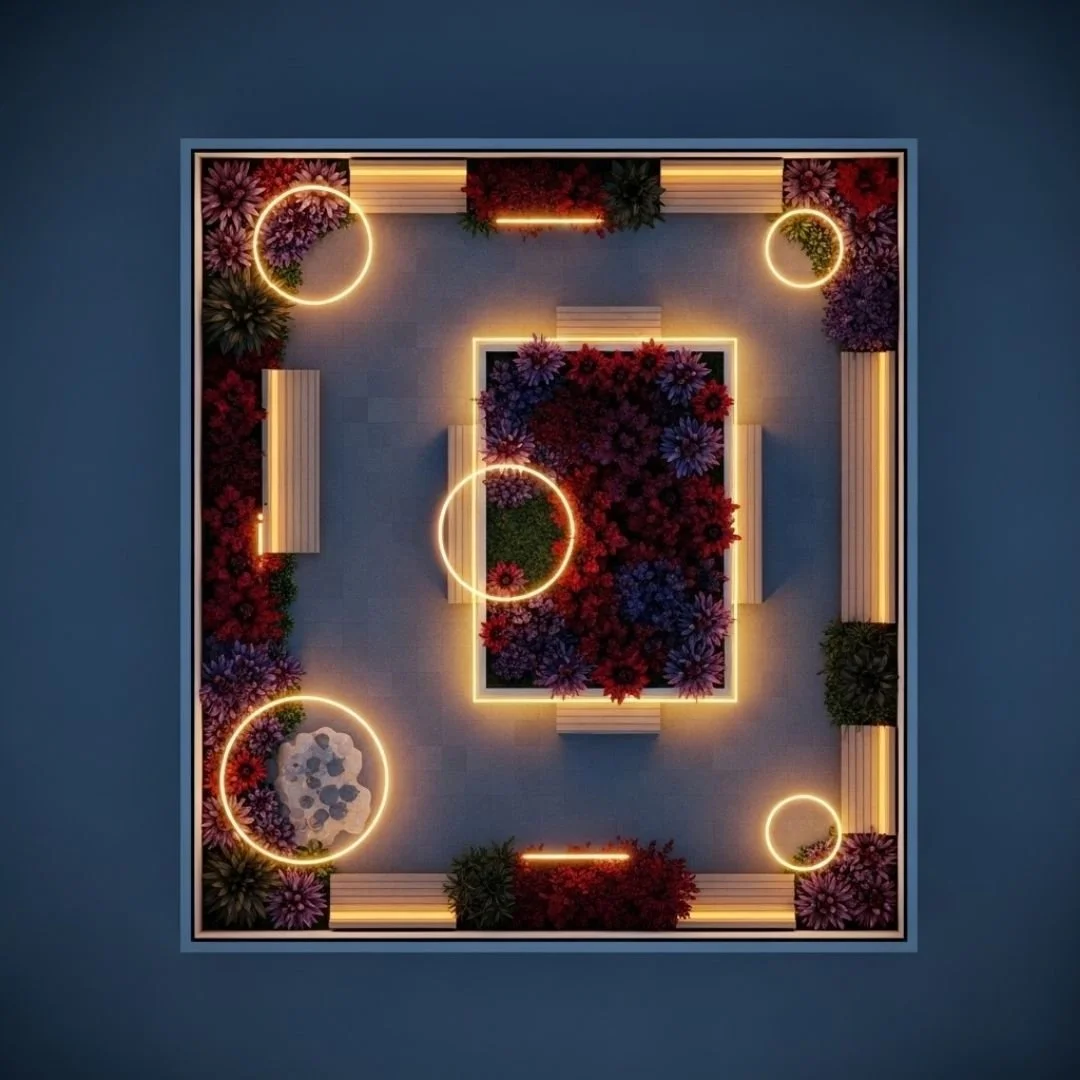
The Signature Layout
A high-fidelity 3D Digital Twin allows us to test light absorption physics before construction begins.
In our digital studio, we don't play with "rough ideas." We simulate reality. Using our Complete Blueprint (£1,200), we build a Digital Twin—a 1:1 virtual replica of your site data. We calibrate the physics of the 2700K lighting against custom-coded plant shaders, allowing us to render the exact atmosphere of your garden at precisely 19:00 (Dusk). We stress-test the silhouetting against your choice of porcelain and brickwork, ensuring you get "Gothic Romance" rather than a murky "Black Hole" before you spend a single penny on contractors. This is how we eliminate risk and protect your investment.
This is why we don't sell "consultations"—we provide high-precision Packs. Our process is built on the same principles as modern level design: we check for flow, collision, and visual hierarchy long before the "build" button is ever pressed in the physical world.
