Portfolio Feature

Marlborough Mews

A compact London courtyard redefined as a tropical nocturnal sanctuary

A compact urban garden restructured through clear Zoning Logic, layered tropical planting, and a cinematic 2700K lighting strategy. The result is a calmer, more immersive courtyard with stronger material hierarchy, improved circulation, and a defined after-dark identity.

Location Marlborough Mews, London
Project Type Compact courtyard garden transformation
Design Language Tropical planting, herringbone hardscape, nocturnal atmosphere
Key Features 3D visualisation, 2D masterplan, planting design, 2700K lighting
Planting Atmosphere

Layered Tropical Enclosure

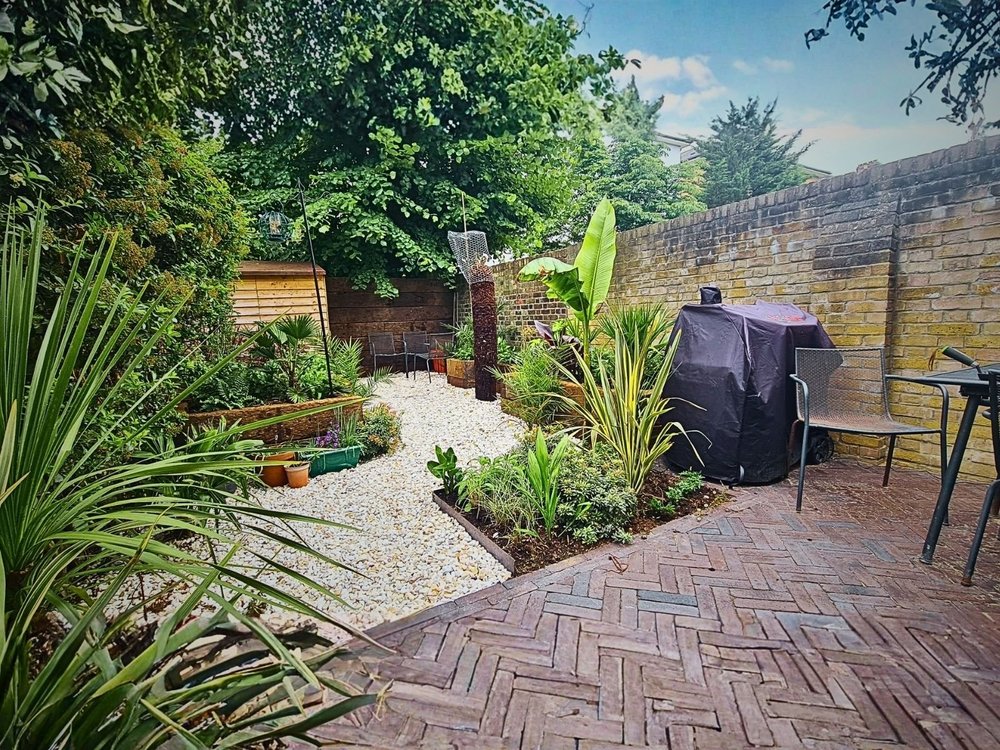
The planting strategy was designed to create immediate density, textural layering, and long-term seasonal presence. Broad-leaf form, evergreen rhythm, and tonal contrast establish a compact jungle character without losing control.

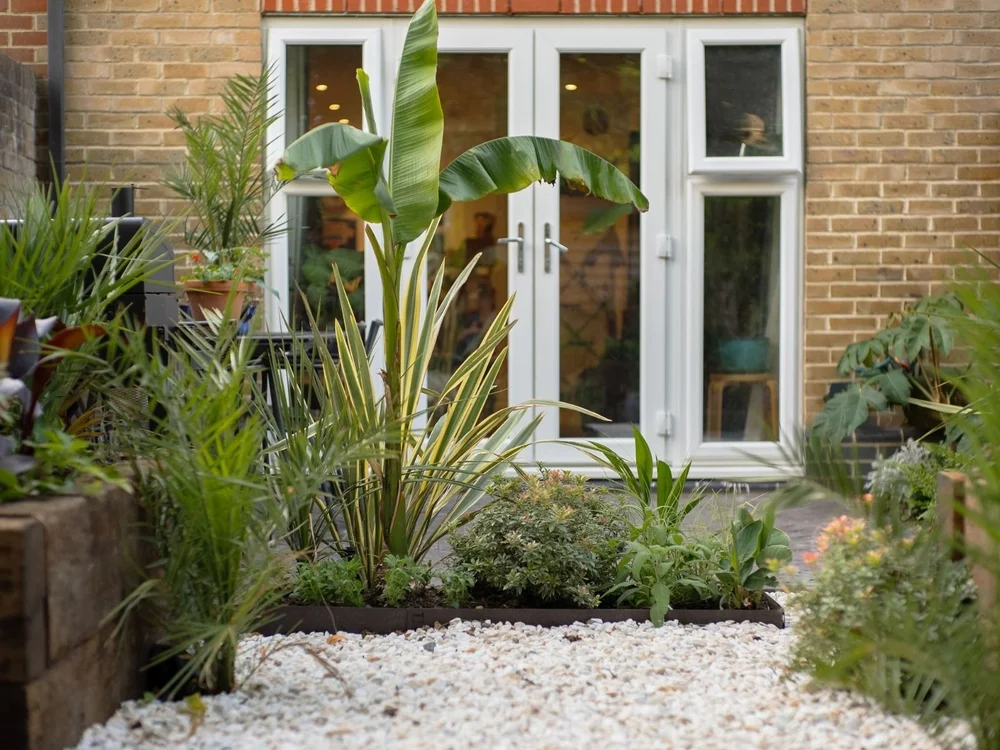
Tropical planting design near house with banana plant and layered greenery in small garden
Threshold planting compresses the entry sequence and heightens immersion from the first step.
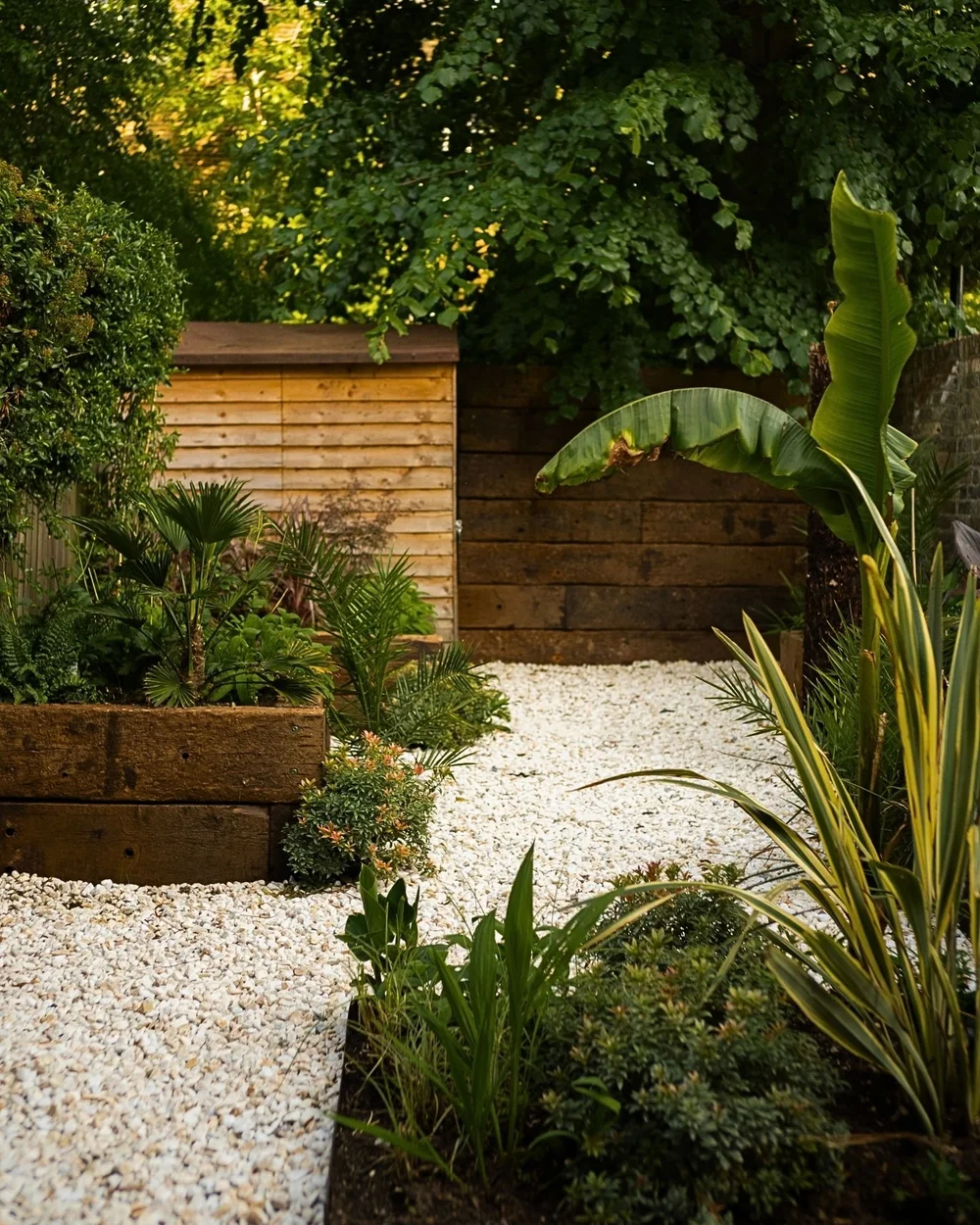
Large tropical leaves in garden planting design showing texture and foliage detail
Broad-leaf structure amplifies enclosure, texture, and tropical presence within a compact footprint.
Existing Condition

Before: Spatial Tension and Weak Zoning

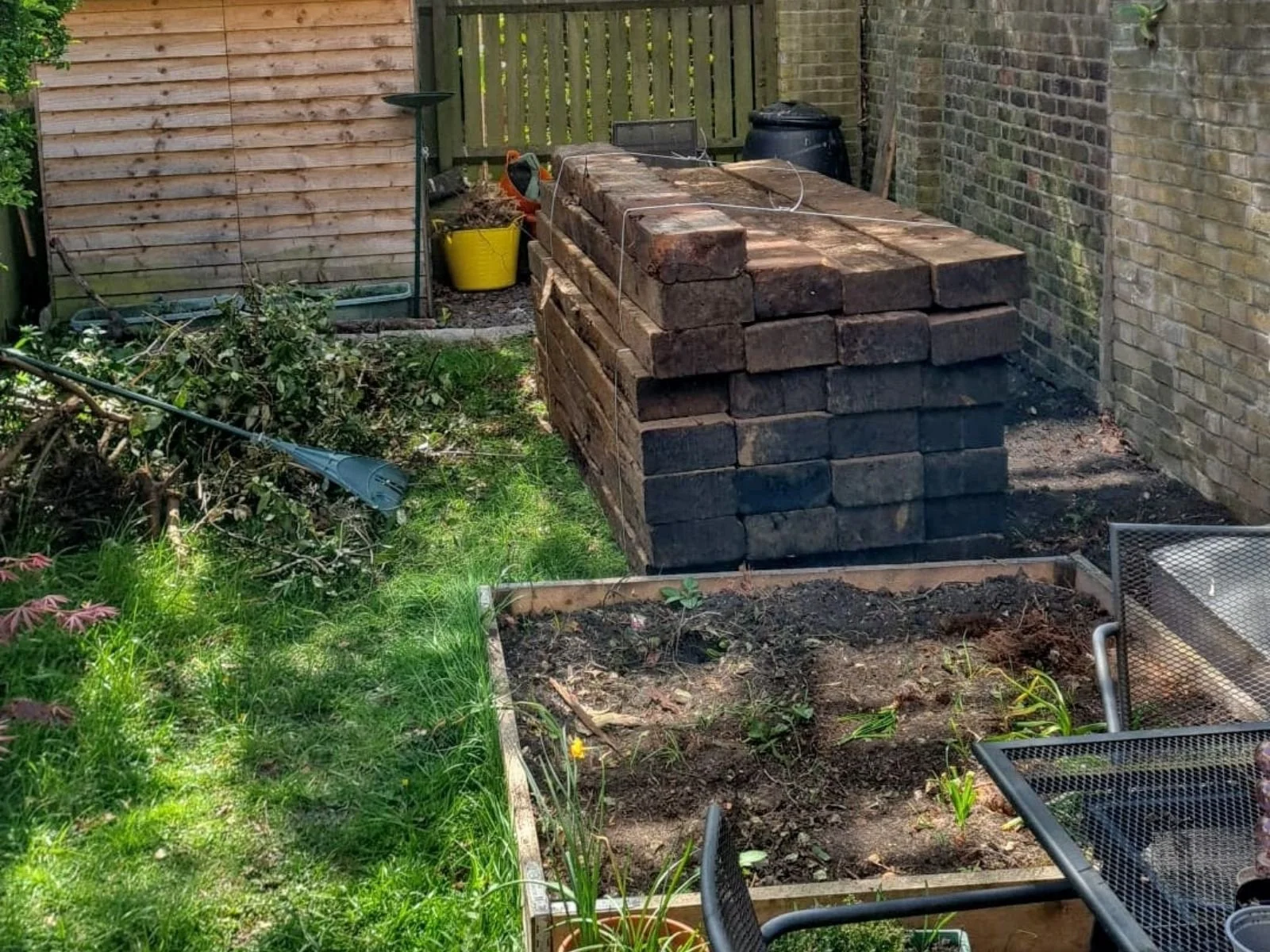
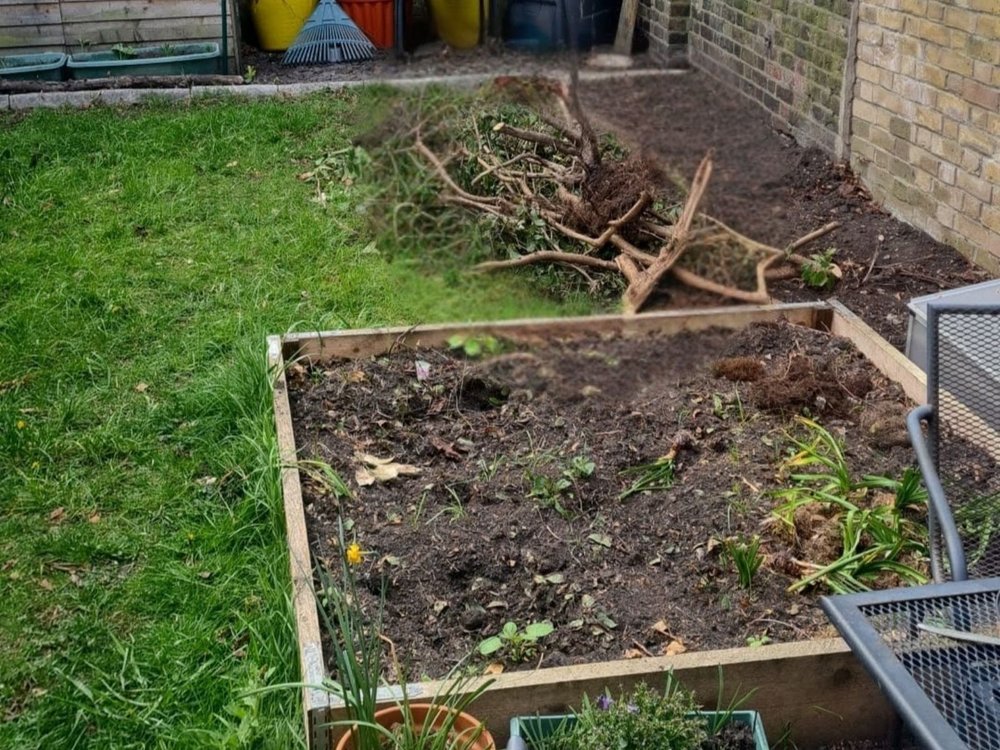
The original garden suffered from weak spatial definition, fragmented planting, and low-value surface use. Material clutter, unresolved edges, and a lack of clear circulation created Spatial Tension and limited the garden’s atmospheric potential.

Small London garden before landscaping with stacked materials and disorganised layout
The original condition lacked hierarchy, clarity, and usable spatial order.
Before garden with patchy lawn and unstructured planting bed lacking defined layout
Weak edges and unresolved planting created visual friction and inefficient use of space.
Design Development

From Spatial Diagnosis to Visual Clarity

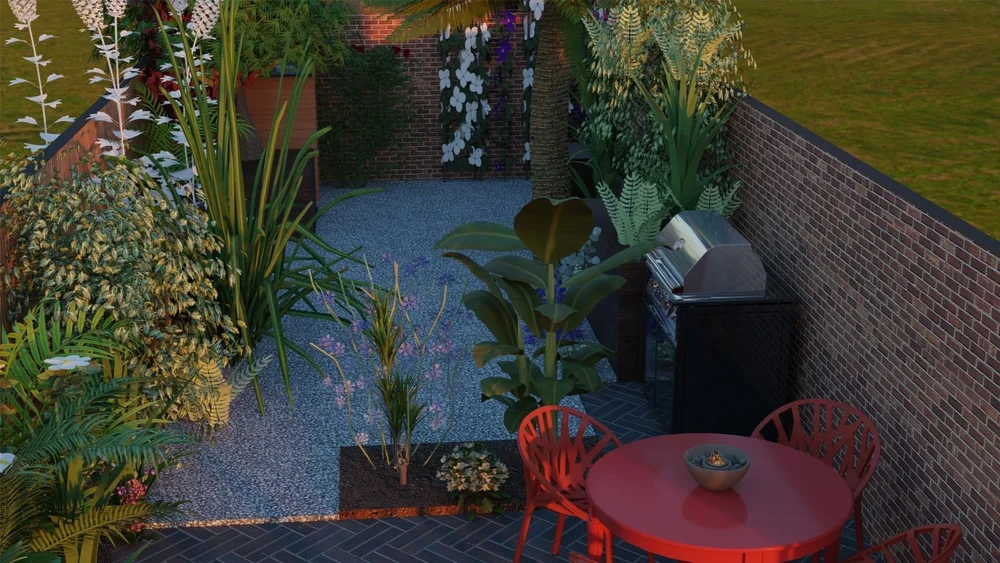
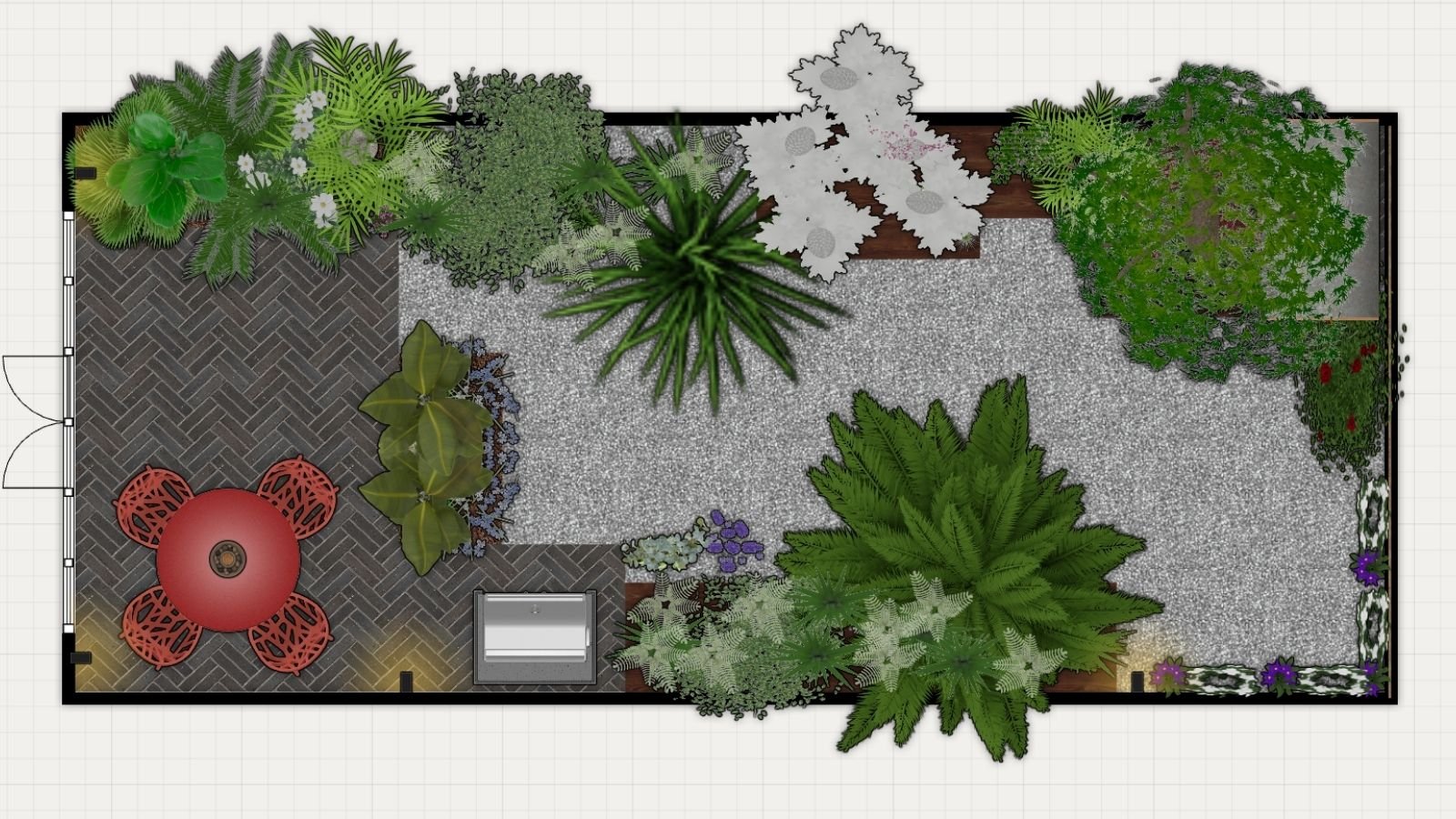
The design process combined 3D visualisation with a measured 2D masterplan to test circulation, planting mass, and material hierarchy before implementation. This reduced ambiguity and ensured the final build followed a clear spatial script.

3D garden design visual showing tropical planting layout and patio arrangement
The 3D visual established massing, circulation, and planting rhythm before implementation.
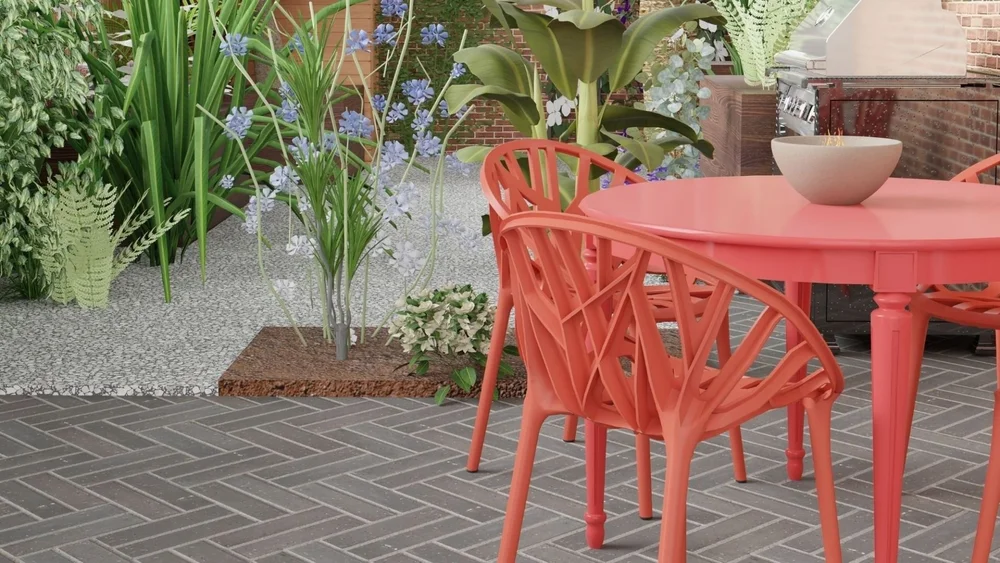
3D render of garden patio with dining table and tropical planting design
Design detail resolving patio composition and planting integration.
Top down garden design plan showing layout zoning and tropical planting arrangement
The measured masterplan translated design intent into buildable spatial logic.
Nocturnal Layer

2700K Lighting as Spatial Architecture

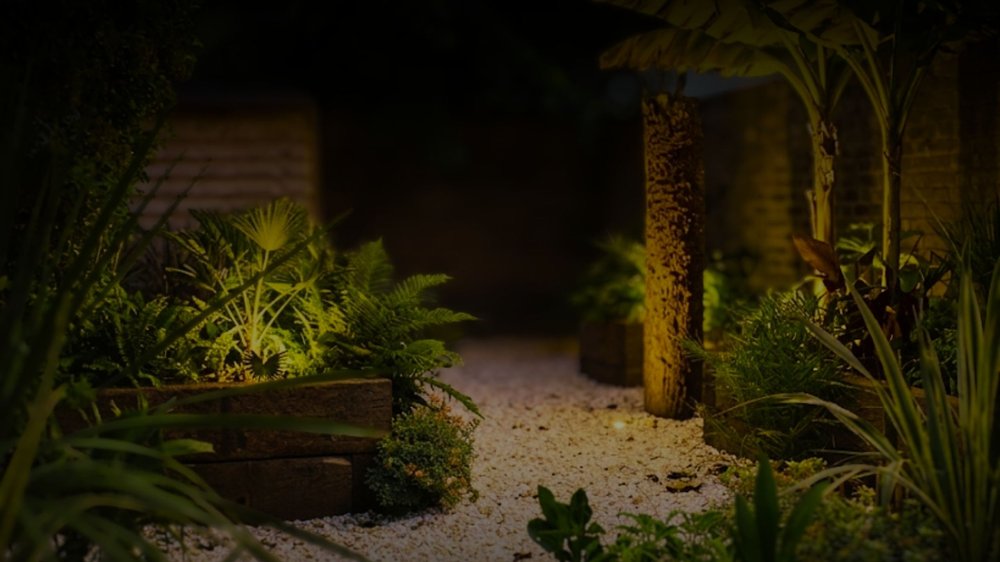
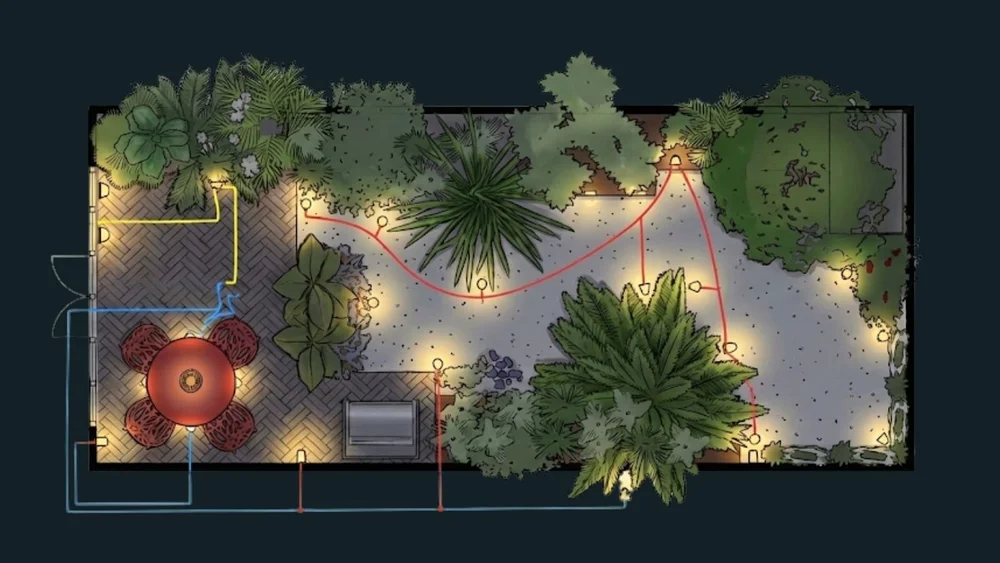
The lighting strategy was designed around 2700K ultra-warm LED illumination, using controlled pools of light to reinforce structure, texture, and planted depth after dusk. The garden does not simply remain visible at night; it becomes more deliberate, more cinematic, and more immersive.

Garden illuminated at night with 2700k warm LED lighting highlighting tropical plants
Cinematic 2700K illumination reinforcing structural depth after dark.
Garden lighting plan showing circuits path lights uplights and warm lighting design
A 2700K lighting schematic defined the garden’s nocturnal hierarchy with precision.
Botanical Intelligence

Planting Structure and Seasonal Performance

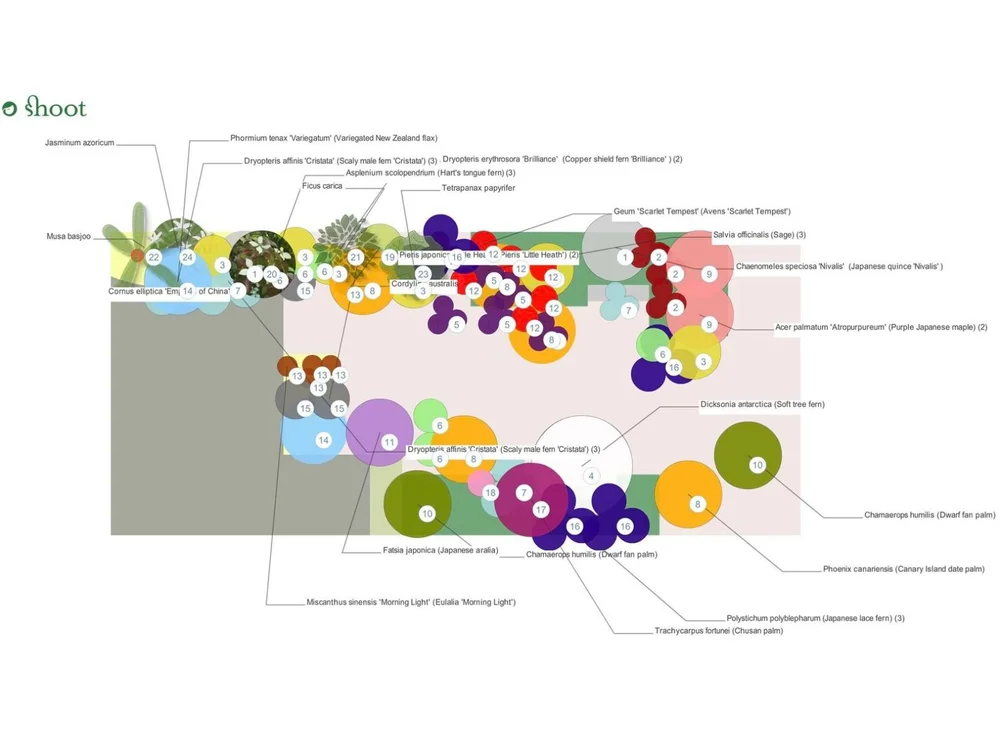
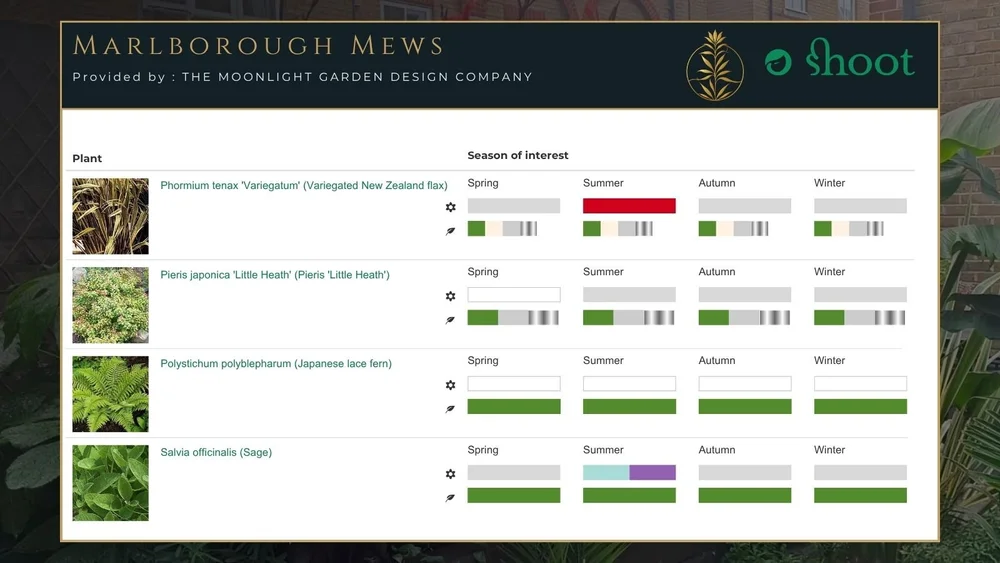
The planting composition was supported by a structured specification layer, balancing broad-leaf drama, evergreen rhythm, and seasonal performance. This ensured the scheme delivered both immediate atmosphere and long-term resilience.

Tropical garden planting plan and botanical specification layout
Technical planting specification detailing broad-leaf structure and evergreen rhythm.
Seasonal planting calendar showing flowering and structure across seasons in garden design
Seasonal calibration ensured the scheme carried structure and interest beyond initial installation.
Client Response

What the client said

“What a transformation. The garden is now a mini tropical paradise and somewhere we genuinely want to spend time.”

“The 2D and 3D mock-ups helped us clearly visualise what was possible, and the design was rooted in smart principles tailored to how we wanted to use the space.”

“A month on, everything Stuart chose is thriving.”

— Lucy Emms Read the full Google review
Next Step

Considering your own transformation?

Whether the issue is weak circulation, unresolved zoning, or a garden that disappears after dark, the same design logic can be applied to reshape the space with greater clarity, atmosphere, and long-term structure.